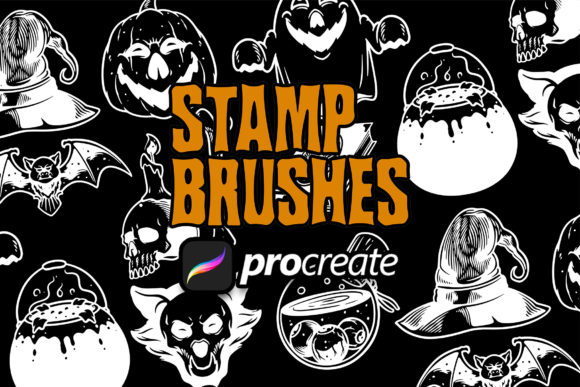
Maximizing Creative Efficiency with the Halloween Part Stamp Brush 1 Collection
As the autumn season approaches, digital designers, illustrators, and marketing professionals face the recurring challenge of producing fresh, engaging Halloween-themed content without succumbing to creative burnout or tight deadline pressures. In this landscape, specialized asset packs like Halloween Part Stamp Brush 1 emerge as practical tools designed to streamline the workflow. This resource is not merely a collection of clipart; it is a functional brush set engineered for integration into major graphic design software, allowing users to construct complex visuals rapidly. By understanding the specific capabilities and limitations of this tool, creators can determine whether it aligns with their project requirements or if an alternative approach might yield better results.
Understanding the Core Functionality and Contents
The primary value proposition of Halloween Part Stamp Brush 1 lies in its modularity and ease of use. Unlike static image files that require manual positioning, scaling, and rotation for every element, this package leverages the brush engine of design applications. The process is straightforward: users select the appropriate brush from the panel and apply strokes to the canvas. This method transforms repetitive tasks, such as scattering leaves, arranging pumpkins, or creating spooky borders, into fluid, intuitive actions.
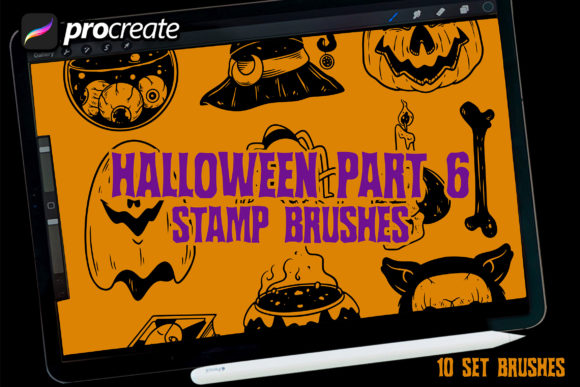
What makes this package distinct is its comprehensive nature. As noted in the product description, it includes everything needed for making logos, illustrations, or special backgrounds. The "part stamp" terminology suggests that the brushes are composed of individual elements—such as bat wings, pumpkin segments, ghostly wisps, or cobweb strands—that can be combined to form larger compositions. This modular approach offers greater flexibility than pre-made full-scene illustrations, allowing designers to maintain unique layouts while benefiting from pre-drawn assets. The inclusion of diverse elements ensures that the tool can serve multiple purposes, from subtle textural overlays to bold, central graphic features.
Comparing Brush-Based Workflows to Traditional Methods
When evaluating Halloween Part Stamp Brush 1, it is essential to compare it against other common methods of acquiring Halloween graphics. The most traditional alternative is purchasing individual vector icons or raster images. While these offer high precision, they often require significant time to arrange cohesively. Designers must manually adjust each element’s perspective, lighting, and scale to ensure visual harmony. In contrast, brush sets automate much of this distribution, providing a natural, organic scatter that is difficult to replicate manually without extensive effort.
Another alternative is using general-purpose shape tools or pen tablets to draw elements from scratch. This approach offers maximum creative control and originality but demands a high level of artistic skill and time investment. For professionals working on tight turnaround times for social media campaigns or event flyers, the efficiency of a stamp brush is unparalleled. However, for bespoke branding projects where uniqueness is paramount, relying solely on stock brushes may result in designs that feel generic if not customized heavily.
Furthermore, compared to procedural generation tools or AI-driven image generators, Halloween Part Stamp Brush 1 offers predictable, editable outcomes. AI tools can create stunning imagery but often struggle with specific compositional control and layer separation. Brush sets provide discrete, manageable layers and elements that can be easily tweaked, colored, and integrated into existing design systems without the unpredictability of algorithmic generation.
Assessing Strengths and Practical Applications
The strengths of this brush pack are most evident in scenarios requiring rapid iteration and volume. For example, a social media manager tasked with creating thirty days of Halloween-themed stories can use the brush to quickly generate varied backgrounds. By changing colors, opacity, and brush size, a single stroke can yield dozens of unique looks. This versatility makes the tool particularly suitable for:
- Digital Scrapbooking and Journaling: The organic feel of stamp brushes adds texture and depth to digital pages without overwhelming the layout.
- Web and App Backgrounds: Creating seamless or semi-seamless patterns for seasonal website headers or app interfaces becomes a matter of minutes rather than hours.
- Print-on-Demand Products: Designers can quickly assemble motifs for t-shirts, mugs, or tote bags, leveraging the modular parts to create balanced compositions.
- Educational Materials: Teachers and content creators can produce engaging Halloween worksheets or presentation slides with consistent thematic elements.
The simplicity of the interface—placing strokes and selecting from the panel—lowers the barrier to entry for beginners while still offering utility for seasoned professionals who need to speed up their production pipeline. The ability to make logos and illustrations suggests that the elements are clean and scalable, likely provided in formats that retain quality upon resizing, which is crucial for professional output.
Limitations and Decision Factors
Despite its advantages, Halloween Part Stamp Brush 1 is not a universal solution. Users must consider certain tradeoffs. First, brush-based assets are often raster-based, meaning they may lose resolution if scaled up significantly beyond their original creation size. If a project requires large-format printing, such as billboards or banners, users should verify the resolution of the brush tips or consider converting them to vectors if possible. Second, because these brushes are available to a wide audience, there is a risk of visual saturation. If many designers use the same default settings, outputs may begin to look similar. To mitigate this, users should invest time in customizing the brush dynamics, such as angle jitter, spacing, and color variation, to create a unique signature style.
Additionally, the "part stamp" nature requires a good eye for composition. Unlike a complete illustration, the user is responsible for assembling the parts into a coherent whole. This means that while the tool saves time on drawing, it does not eliminate the need for design principles such as balance, contrast, and hierarchy. Those lacking strong compositional skills may find the results chaotic if they simply spray the brush without thoughtful placement.
When to Choose This Tool Over Alternatives
Deciding whether to integrate Halloween Part Stamp Brush 1 into your toolkit depends on your specific project constraints and goals. This resource is the right choice when:
- Speed is critical: You need to produce multiple variations of a design in a short timeframe.
- Consistency is key: You want a uniform style across a series of assets, such as a social media campaign or a branded event suite.
- You prefer hands-on control: You want more agency over the final look than AI generators provide, but less labor than drawing from scratch.
- Budget is a factor: Compared to hiring an illustrator for custom artwork, a brush pack is a cost-effective one-time purchase.
Conversely, you may need another option if your project demands highly specific, proprietary imagery that cannot be found in stock libraries, or if you require fully scalable vector graphics for massive print applications without any pixelation risks. In such cases, commissioning a custom illustrator or using advanced vector construction techniques may be more appropriate.
Final Thoughts on Integrating Seasonal Assets
In the competitive world of digital design, efficiency tools like Halloween Part Stamp Brush 1 serve as valuable allies. They bridge the gap between creative ambition and practical deadlines. By offering a versatile array of elements for logos, illustrations, and backgrounds, this package empowers users to focus on the strategic aspects of design rather than getting bogged down in repetitive drawing tasks. However, the true potential of the tool is unlocked only when users combine its convenience with their own creative judgment. Customizing the application of the brushes, experimenting with blending modes, and integrating the stamps with other design elements will ensure that the final output remains fresh, professional, and distinct. Whether you are a seasoned graphic designer or a hobbyist looking to enhance your seasonal projects, understanding how to leverage such resources effectively can significantly elevate the quality and impact of your work.