Evaluating 10 Flowers Stamps Procreate for Digital Illustration Workflows
Digital illustration has evolved from a niche hobby into a robust professional industry, driven by tools that bridge the gap between traditional artistry and modern efficiency. For artists working within the iPad ecosystem, Procreate remains the dominant platform due to its intuitive interface and powerful brush engine. However, even seasoned illustrators often face the bottleneck of repetitive element creation. This is where specialized asset packs, such as 10 Flowers Stamps Procreate, enter the workflow. These resources are not merely decorative additions; they are functional tools designed to streamline the creative process for professionals, marketers, and serious hobbyists alike.
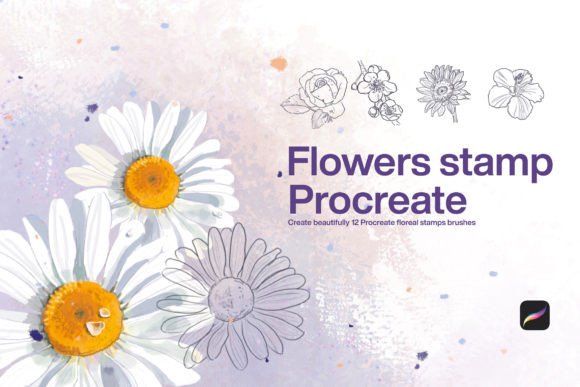
The concept behind flower stamps is straightforward yet impactful. Instead of painting each petal, stem, and leaf from scratch—a process that can consume hours depending on the level of detail—artists utilize pre-rendered, high-resolution stamps. The specific pack known as 10 Flowers Stamps Procreate offers a curated selection of floral elements that can be stamped onto the canvas with a single tap. When paired with complementary sets like the 10 Flowers Emotion Stamps for Procreate, these tools provide a versatile library for creating complex compositions rapidly. Understanding the practical utility of these assets requires looking beyond the aesthetic appeal and examining their integration into professional workflows.
Operational Efficiency and Workflow Integration
The primary value proposition of any stamp pack is time savings. In commercial illustration, greeting card design, or social media content creation, turnaround time is a critical metric. Using your iPad as you would paint with Flowers Stamps allows for a hybrid approach to digital art. You retain the organic feel of hand-painted textures while leveraging the speed of digital replication. For a freelance graphic designer tasked with creating a series of botanical-themed Instagram posts, manually illustrating ten unique floral arrangements might take an entire day. With a well-constructed stamp set, the foundational elements can be placed in minutes, allowing the artist to focus on composition, color grading, and lighting.
However, efficiency should not come at the cost of originality. A common concern among professionals is that using stamps leads to generic-looking artwork. This risk is mitigated by the flexibility inherent in Procreate’s layer system. The 10 Flowers Stamps Procreate are typically provided as individual PNG files or custom brushes, which means they can be manipulated extensively. Artists can resize, rotate, recolor, and blend modes to ensure that no two flowers look identical. By overlaying multiple stamps, adjusting opacity, and adding hand-drawn details on top, creators can produce unique pieces that do not appear mass-produced. This balance between speed and customization is what makes these tools viable for high-end projects.
Quality, Resolution, and Technical Consistency
When evaluating digital assets, technical quality is non-negotiable. Low-resolution stamps will pixelate when scaled, rendering them useless for print materials or large-format displays. High-quality packs like 10 Flowers Stamps Procreate are engineered with high DPI (dots per inch) standards, ensuring clarity even when enlarged. The edges of the floral elements should be clean, without unwanted halos or jagged artifacts, which indicates careful extraction from the original source material.
Consistency in style is another crucial factor. A cohesive stamp set maintains a uniform artistic voice—whether it is watercolor, ink sketch, or vector-style flat design. This consistency allows artists to mix and match different flowers within the same composition without jarring stylistic clashes. For educators and publishers creating instructional materials, this visual harmony is essential for maintaining professional credibility. The inclusion of 10 Flowers Emotion Stamps further expands this utility by providing expressive variations. These emotion-based stamps might feature flowers with anthropomorphic qualities or specific compositional arrangements that convey mood, adding a narrative layer to static illustrations.
Versatility Across Professional Applications
The audience for 10 Flowers Stamps Procreate is diverse, ranging from small business owners designing packaging to bloggers creating featured images. Each group leverages the tool differently:
- Marketers and Social Media Managers: Use floral stamps to create eye-catching backgrounds and frames for text-heavy posts, enhancing engagement without requiring advanced illustration skills.
- Wedding and Event Designers: Rapidly prototype invitation suites and menu cards, experimenting with different floral arrangements before committing to final prints.
- Educators and Content Creators: Incorporate botanical elements into worksheets, presentations, and educational videos to make content more visually appealing and accessible.
- Fashion and Textile Designers: Use stamps as base patterns for fabric designs, which can then be refined and repeated using Procreate’s symmetry tools.
The practical value lies in this adaptability. A stamp that serves as a simple border for a blog header can also be deconstructed and used as a texture overlay in a digital painting. This multi-functionality ensures that the investment in the asset pack yields long-term returns across various project types.
Limitations and Realistic Expectations
While 10 Flowers Stamps Procreate offers significant advantages, it is not a substitute for fundamental artistic skill. Users must understand that stamps are building blocks, not finished products. Relying solely on stamps without understanding color theory, composition, or lighting will result in flat, unengaging work. Furthermore, the limited number of distinct flowers in a "10 Flowers" pack means that repetition can become apparent if not managed carefully. Artists must employ techniques such as clipping masks, gradient maps, and custom brushes to vary the appearance of each stamp.
Another consideration is compatibility. While Procreate is highly versatile, users must ensure that the stamp files are in a format compatible with their version of the app. Most modern packs use .brushset or .png formats, which are widely supported, but verifying file integrity upon download is a best practice. Additionally, licensing terms vary. Professionals using these assets for client work must review whether the license permits commercial use, ensuring they remain compliant with intellectual property standards.
Strategic Recommendations for Implementation
To maximize the potential of 10 Flowers Stamps Procreate, consider integrating them into a layered workflow. Start with a rough sketch to define the composition, then use the stamps to block in the floral elements. Treat each stamp as a separate layer, allowing for non-destructive editing. Experiment with blending modes such as Multiply or Overlay to integrate the flowers naturally into the background. Adding hand-drawn stems or leaves can help connect disparate stamps into a cohesive bouquet.
For those interested in expressive storytelling, combining the standard floral stamps with 10 Flowers Emotion Stamps for Procreate can add depth. These emotion-focused assets might include wilting flowers for melancholy themes or vibrant, bursting blooms for joyous occasions. By aligning the visual language of the flowers with the emotional tone of the project, creators can enhance the communicative power of their art.
In conclusion, 10 Flowers Stamps Procreate represents a pragmatic solution for digital artists seeking to optimize their workflow without sacrificing quality. It is a tool that respects the user’s time while providing the flexibility needed for professional output. Whether you are a seasoned illustrator looking to speed up repetitive tasks or a beginner aiming to create polished designs, these stamps offer a reliable foundation. Success depends not just on the quality of the assets, but on the creativity and technical skill applied in their usage. By understanding the strengths and limitations of these tools, artists can effectively incorporate them into a sustainable and productive digital practice.